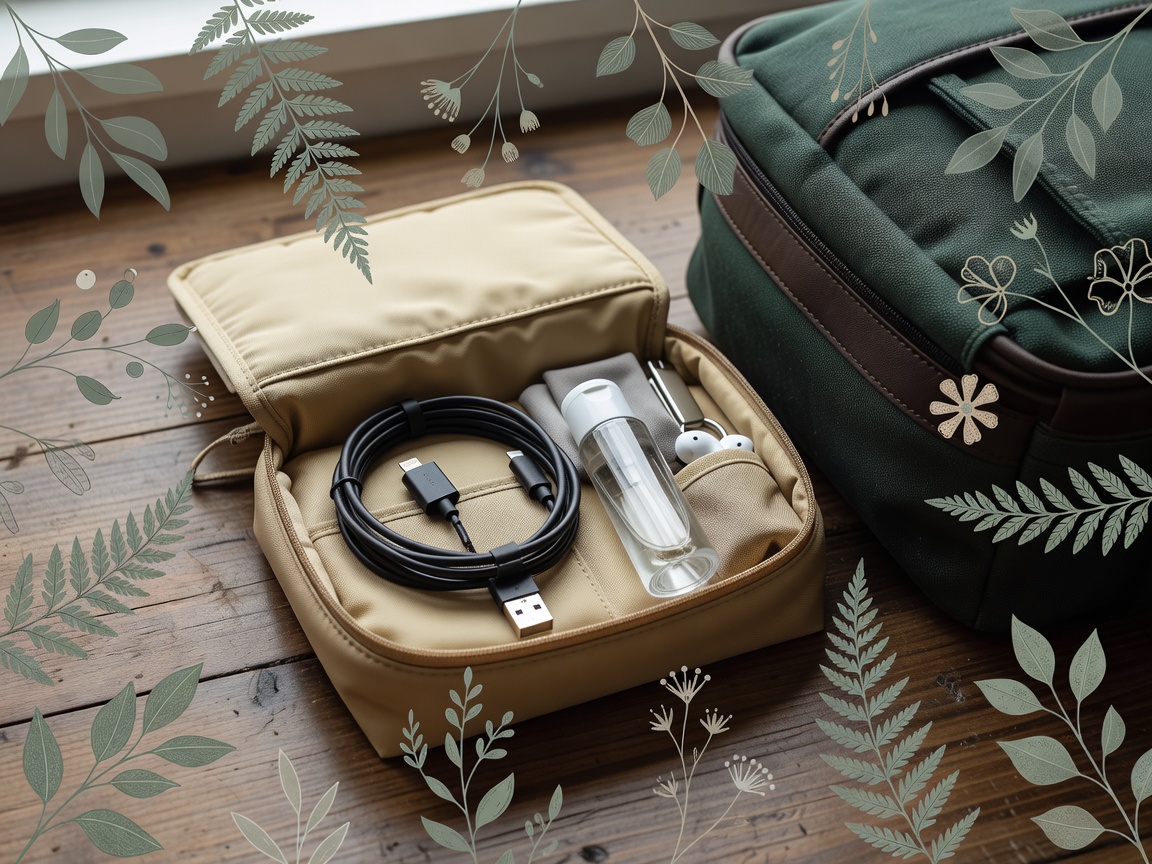
The best travel organizer depends on what happens between leaving and arriving. A commuter looking for earbuds has a different problem from a family sorting clean clothing across several overnight stops. Before choosing a pouch or cube, picture the actual transitions: leaving home, finding a ticket, changing transport, charging a device and unpacking at the other end.
Place the objects you use during those transitions together. Then check whether the bag’s existing pockets already handle the job. A new organizer earns its place only if it reduces searching, contains a mess or makes repacking easier. If it simply adds another zipper between you and your things, keep the arrangement simpler.
Rank the organizers by the problem
Small essentials pouch
Our first choice for loose cables, adapters and small non-sensitive items. A wide opening and visible interior usually matter more than numerous elastic loops. A spare pencil case is a sensible trial version.
Simple clothing cube
Useful when clothes shift around or you unpack at several stops. Choose a size that fits your existing bag. Compression designs can reduce clothing volume, but they do not reduce the weight you carry.
Washable wash bag
A contained place for toiletries helps separate them from clothing. Check whether the lining is genuinely easy to wipe and whether it can dry fully. Do not assume a fabric pouch will contain a leaking bottle.
Document wallet
Helpful if you actually carry several paper documents. It may be redundant for a short domestic journey with little paperwork. Keep valuable documents secure and avoid storing every backup in the same place.
One kit is not every trip
For a commute, concentrate on access. A compact pouch that moves between bags can be useful, but it should not contain every adapter you own. Put the regular charging lead and required work accessories together, then leave rarely used duplicates at home unless there is a specific reason to bring them.
For an overnight stay, separate clothing from the items needed during travel. One cube and a small wash bag may be enough. For a longer trip, organize around outfit groups, activities or individual travelers—whichever makes unpacking easier for you. Avoid buying a complete matching set before finding out whether you prefer cubes at all.
Useful when
You change bags, share luggage or regularly lose small essentials in a deep compartment.
Less useful when
Your existing bag already has clear, accessible pockets and you can find everything without extra layers.
Check portability before pocket count
| Type | Portability question | Maintenance question |
|---|---|---|
| Essentials pouch | Does it fit the everyday bag without bulging? | Can crumbs and dust be removed from corners? |
| Packing cube | Does its filled shape fit the luggage? | Can it be washed and dried as instructed? |
| Wash bag | Will it stand or hang where you use it? | Can the lining be cleaned and fully air-dried? |
| Document wallet | Can you reach it without exposing everything? | Can closures and seams be inspected easily? |
Rules beat packing hacks
Airline cabin-bag dimensions, liquid restrictions and battery rules are not interchangeable. Check your carrier, departure airport and relevant authorities shortly before travel. The TSA’s What Can I Bring? resource concerns screening in the United States. The UK government’s hand luggage guidance covers a different jurisdiction. Neither replaces a carrier’s own baggage conditions.
For power banks and spare lithium batteries, consult current carrier instructions and the FAA PackSafe guidance where relevant. Do not treat a travel organizer as safety equipment. A zipped pocket does not make a damaged battery safe, and a neat liquids bag does not establish that its contents are permitted.
Give the kit a ten-minute rehearsal
Pack the bag, close it and carry it around your home. Retrieve the item you expect to need first without placing everything on the floor. If the pouch is hard to reach, move it. If a rigid organizer consumes too much space, try a softer existing bag. If the load feels excessive, removing an unnecessary item is more effective than finding a cleverer pocket.
After the trip, empty the organizer completely. Let damp items dry, check for leaks and remove receipts or accessories that have quietly become permanent passengers. A travel kit is useful because it stays ready, not because it stays full. Keep the few things that reliably earned their space and let the rest return to ordinary storage.